Over the past two years since I’ve been in college, my sleep cycle has been seriously awkward. I usually get to sleep at sometimes 3 am and have to wake up for an 8 am class in the morning. Most of the time when I fall asleep I feel as though I was sleep for about 10 or 15 minutes at most, until the loud and obnoxious sound of my alarm interrupts me; telling me that in reality my few hours of peace and relaxation are over. For the most part I sleep and don’t really dream, however since reading Sigmund Freud’s book “Interpretation of Dreams”, I have noticed that when I do dream they either tend to be incredibly awesome leaving me upset that it has to end, or on the contrary a complete nightmare that leaves me sweating and terrified when waking up.
The famous and very popular scholar, pioneer, and researcher of sleep William Dement once said “Dreaming permits each and everyone of us to be quietly and safely insane each and every night of the week”. Now before I jump into trying to analyze and dissect both Sigmund Freud and William Dement, id like to question why we even have dreams. It is so weirs to me that we dream each and every night, however I only recall dreaming maybe once or twice a week. Now going back to Dements quote, I agree 100% with what he said in regards to dreams. I know from my personal track record of my dreams that sometimes I dream that I am the most awesome man in the world, and sometimes on the contrary I dream that I am being chased, or captured on the verge of death. Dreams in my opinion really do allow us as humans to be crazy, awesome, figments of our imagination, and human all at the same time. But the real question is what do dreams mean? Do they even have real meaning?
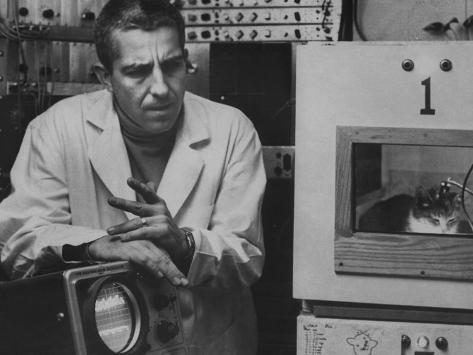 |
| William Dement |
Sigmund Freud, the father of “psychoanalysis” as well as the writer of the book Interpretation of dreams, researches and helps to give answers to the many questions that many of us have in mind in regards to our love-hate relationship with dreams. Although his theory of interpreting dreams has been brutally criticized by many, it is without a doubt agreed upon that his ideas have exerted much influence on today’s culture in regards to dreams. He starts by making the distinction between “latent” and “manifest” dreams by illustrating that manifest dreams are surface level dreams (what we dreamt), while latent dreams are our dream thoughts expressed in special language (what the meaning is).
“in the following pages I shall provide that there is a psychological technique which allows us to interpret dreams, and that when this procedure is applied, every dream turns out to be a meaningful, psychical formation which can be given an identifiable place in what goes on within walking life”. (Sigmund Freud: Interpretation of Dreams)
 |
| Sigmund Freud |
Freud believes that although scientific opinion has come to dismiss the idea that dreams can be interpreted, “popular opinion” has held on to the conception that dreams do in fact have meaning. He uses the scientific method to prove this. He shows that dreams have “ulterior motives” in which means that the meanings of dreams go beyond what it appears to be on the surface. He concludes that the idea of “wish-fulfillment” is the meaning of each and every dream, and hence there can be no dreams without wishful dreams”. I no by this point your wondering what the heck wish-fulfillment is but don’t worry I will explain. Wish-fulfillment is an attempts by the unconscious to resolve a conflict of some sort, whether it be something as recent as that day, or something that is remembered from the past. However, due to the information in the unconscious being boisterous and unsettling, a “censor” in the pre-conscious does not allow it to pass through to the conscious. It’s important to note that the unconscious mind must wrap the meaning of the information to make it through censorship. In shorter terms, Freud’s theory in Interpretation of Dreams is that “images in dreams are not what they appear to be on the surface, they need deeper analysis and interpretation of they are to inform on the structures of the unconscious”.

So in connecting Sigmund Freud’s theory on dreams into the many questions that you and I have in regards to understanding meaning of our interesting awesome or interestingly weird dreams, the answer is quite simple. Our dreams that we have every night are much deeper than just being chased and killed, or marrying your most sought after crush; instead it goes beyond that. Although it can not be proven exactly what each and everyone of one our dreams literally means, it is without question that dreams do have meaning beyond the surface, as Freud portrayed in his book.

I found this very interesting because lately I have been having odd dreams. I dreamt about my study abroad a few nights ago and was terribly unprepared for what I encountered in my dream in Ireland. This definitely reflects what I have been thinking a lot about lately as my orientation for Ireland is this saturday and it has been all my friends can talk about. I would like to see what some of my less obviously relatable dreams mean though.
ReplyDeleteI loved this blog. I took a psych class back in high school and we spent maybe a month focusing only on dreams. By the end of that we all pretty much decided that dreams were meant to help us sort through problems in out own lives. This actually relates to what Stella said about study abroad. I also had a dream that I was in Ireland and the guy from Lucky Charms stole my passport and I couldn't go anywhere in Ireland. When I woke up I had to focus myself and tell myself that I can do this and that I am used to traveling and that in no way in hell is a tiny leprechaun going to take my Passport.
ReplyDeleteYou did a great job of making the Freud stuff easily understandable. Dreams certainly are a strange phenomenon. At one point in the blog, you talked about Freud's idea of wish fulfillment. Do you see a connection here between Freud and Lacan? As Isabelle and Stella talked about in their blogs, Lacan gives us the idea of "X creates a wanting I". Do you see any lead in to this and how we interpret dreams, especially wish fulfillment? Perhaps the "problem" that we try to solve in our dreams is that of our daily desire or unfulfilled material needs.
ReplyDeleteI agree with Jesse that this post really helped me grasp the ideas and theories of Freud. When I dream I know that there is usually never something that related to my real life so it's interesting that JP and his class came up with thinking that dreams help people sort out their problems. My mind will always be blown by dreams.
Delete