Tuesday, September 18, 2012

Rockie Fresh "You A Lie"


Just when you thought that the Mayback Music Group couldn’t get any stronger, the newest member Rockie Fresh releases the new video for his upcoming Electric Highway Tour, “You a lie remix” which features Rick Ross. Although he seems to be the new kid on the block within MMG, the video directed by Dre Films makes it known that Rockie Fresh has what it takes to fit in with the MMG image. The video illustrates the laid back nature of the song while also adding the MMG swagger as he and Rozay ride around the city of what looks to be Miami.  

Watch the video below and tell us what you think .

 
Dates for the Electric Highway Tour have been released and if your feeling his music and want to catch him live in a city near you make sure to check out the dates below.
 
 
8/30 – Annapolis, MD @ The Whiskey
8/31 – Vienna, VA @ Jammin’ Java
9/03 – Boston, MA @ Middle East
9/05 – Carrboro, NC @ Cat’s Cradle
9/06 – Wilmington, NC @ Soapbox
9/08 – Atlanta, GA @ Vinyl
9/11 – Miami, FL @ Grand Central
9/12 – Orlando, FL @ Firestone Live
9/13 – New Orleans, LA @ Hookah
9/15 – Austin, TX @ Lamberts
9/16 – Houston, TX @ House of Blues
9/18 – Dallas, TX @ House of Blues
9/20 – Oklahoma City, OK @ Industry
9/21 – Albuquerque, NM @ Launchpad
9/23 – Tempe, AZ @ Club Red
9/24 – Los Angeles, CA @ Key Club
9/25 – Pomona, CA @ The Glass House
9/26 – San Francisco, CA @ 330 Ritch
9/27 – Sacramento, CA @ Sole Collective
9/28 – Sparks, NV @ The Alley
10/2 – Seattle, WA @ Barboza
10/3 – Vancouver, BC @ Fortune Sound Club
10/9 – Denver, CO @ Marquis Theater
10/10 – Colorado Springs, CO @ Black Sheep
10/12 – Indianapolis, IN @ Cloud 9
10/13 – Iowa City, IA @ The Blue Moose
10/18 – Milwaukee, WI @ UW – Milwaukee
10/20 – Chicago, IL @ Metro
10/22 – Toronto, ON @ The Hoxton
10/23 – Philadelphia, PA @ The Barbary
10/24 – Pittsburgh, PA @ Shadow Lounge
10/25 – Lansing, MI @ The Loft
10/26 – Detroit, MI @ Shelter

T.I. "Trouble Man"


The Grand Hustle CEO T.I. made it official on a 106 & Park interview that his new album “Trouble Man” is set to be released on December 18th. Even though there were rumors speculating about an early September release, “The King” shut it down and said that he pushed back the date to put in more work to guarantee the best possible project.

Although there has been no official release of the albums track-list yet, T.I. did share a few artists  such as Lil Wayne, Andre 3000, R. Kelly, Cee Lo Green, and A$AP Rocky, that are featured on the album. With all of these artists involved with collaborations on the album, the release of his new book “Trouble & Triumph”, and a new season of his VH1 television series The Family Hustle, it’s safe to say that T.I. has been on his grind the past couple of months.

So how is this album going to compare to some of his previous work? Well according to an interview done by Rap-Up, “The King” says “I think it’s a lot more urban than Paper Trail, and less apologetic than No Mercy”… “I think it’s more diversified than T.I. vs. T.I.P. though. It’s got a lotta heart, it’s got a lotta edge. It’s a creative album. It’s probably harder than most of the shit that’s coming out right now.”

After listening to “Like That”, “Go Get It”, and “LoveThis Life”, three singles from the album, my anticipation for hearing the entire project is at an all-time high. Check out these three songs and tell me what you think of the new “Trouble Man “album set to drop on December 18th.


Sunday, September 16, 2012

The Next Chapter

Tonight on Oprah Winfrey's OWN network she travels all the way to Atlanta, Georgia into the home of Grammy winning singer, song writer, entertainer, and producer, Usher Raymond's home to do an all access interview for her series The Next Chapter.

This interview is not focused at all on the accolades or the success of Usher from a music or entertainment perspective, but rather shines the light on topics that Usher in the past would have liked to remain hidden in the dark. His child custody battles with his two sons, the rumors of infidelity to his ex-wife, his reason for breaking down in court, the recent death of his step-son, as well as even some of his more intimate confessions were all topics which Oprah had no problem exploring.
The real question that I'm sure many are asking is why all of a sudden is he willing to open up and share his story to the world? According to Usher he states that this would be his final interview and that will not be speaking anymore about any of the personal matters discussed with Oprah.
 
With all of the adversity going on his life its safe to say that we could assume that he is seeking  to find closure and ironically move on The Next Chapter of his life and image as Usher Raymond.

Though there is great upside to Ushers career and the influence that he has made on the world of music and more importantly entertainment, I strongly recommend checking out the interview and take a step into the shoes of Usher Raymond and experience this once in a lifetime opportunity to get into the mind of Usher Raymond; because according to him this will be the first and only chance.  


Kyle Grant

Wednesday, May 2, 2012

The Holder Of The World


Scarlett Letter
For class we have recently read the novel Holder of the World, by the author Bharati Mukherjee. Since the moment I opened up the book and began to read I was intrigued at the novel and how much similarity that the book had to Scarlett letter, the last book that we read. However even though both had many similarities, some of the examples that the book illustrates goes hand in hand with many of the numerous theorists that we have analyzed this semester; it was very interesting to see how Bharati’s novel was merely a re-write of the Scarlett letter. Although there are obvious examples of a correlation between two books such as a character named Hester and another with the name Prynne, the use of Salem as well as the puritan society, the fact that this novel seemed to challenge Scarlett letter is what really got me interested in reading more.
Nathaniel Hawthorne
For example, the line on page 284 which states “Who can blame Nathaniel Hawthorne for shying away from the real story of the brave Salem mother and her illegitimate daughter”? As I read deeper into the text and began to see how the novel transform into its own interpretation of Scarlett letter it really opened my eyes to the idea of representation, space, symbol, as well as the fact that over time a stories interpretation or meaning can be altered as well as the idea that other outlooks on something can be discovered.  For example, Holder of The World portrays use of time and space by representing the 18th century to the 1980’s of Salem, Massachusetts to England as well as India all in one novel. By doing so this allows for it to be looked upon as being rebellious to the style of Nathaniel Hawthorne’s book.  In regards to representation, in the novel by Bharati, the use of symbol and representation were used similarly to Hawthorne’s, letter A, however instead of the letter representing Adulterer the novel instead created “Indian Lover” as a representation for what Bharati’s newer interpretation was.


Bharati Mukherjee
With this in mind I really started to question how I would change Scarlett Letter in a way that would be interesting as well as incorporate the use of representation, space, symbolism, as well as modern examples in today’s society and numerous thoughts came to mind. I could for example create a situation where there is a single father and the tables are turned from the typical stereotype of a single mother, or maybe even have a black man “knock up” an upper-class white woman during the extreme prejudice times of the Jim Crow era. 
Though these seem to be bizarre and very extreme in regards to Hawthorne’s Scarlett Letter, there is a great deal of ways in which these ideas of representation, space, symbol, as well as going against the norm are illustrated. With this in mind and after reading the novel The Holder of The World it is clear to see how various interpretations can come to light with a change in time as well as perspective. Though both this book as well as Scarlett Letter are great works of literature and history, the fact that both are so different yet also so similar at the same times really is captivating and shows how present the theories that we have talked about over the course of the semester are really present in this novel.


Sunday, April 22, 2012

Agency and Power

Chapter 13 of The Theory Toolbox focused primarily on “agency” as well as how power has an effect on the way we view agency. The chapter starts by defining power and agency by saying that “given a particular set of constraints on our subjectivities, what actions, operations, and powers can be brought to bear in an interpretation or analysis?” In other words, “agency” is described in this chapter as simply being the power to do something.


Theory Toolbox Ch. 13

Later in the chapter, the use of power and agency as well as history and its context comes into play. A quote that says, “We cannot ignore human agency in history. We cannot, in other words, ignore the fact that people create history by doing things; history is made rather than found.” This quote really made sense because it proved to me that subjects can always be agents because people on a day to day basis do things to create history. The ability to respond to historical contexts is what in fact embodies this idea of subjects having agents. “in light of such representations, the reminder that people are agents who make history is all the more necessary, given the inclination to view the present as inevitable, the future as nothing more than a repetition of the past”. Simply put, our agency is both constrained and enabled by the contexts in which we find ourselves.

Power & Authority

Power comes into play in regards to agency by the example of using wealth presented in the chapter. For example, being wealthy often would translate into a much greater capacity to make choices, to take control over ones time, to enhance ones mobility; all of which create the conditions of improved health, security, and happiness; however not across all contexts. What I mean by this is that when looking at the contrary of wealth, being wealthy and having power also makes the individual an immense target and threat to scam or violence. In other words, representation or the way that others view us in a key role in how society identifies us. “The subject’s positions we occupy are never simply a function of what we choose for ourselves”. Power in other ways such as post-structuralism is an example of how power is illustrated by challenging the norms and what seems to be set in place by society; this idea of “universal truth”. “And such challenges require agency, our capacity to make choices and act, yet another form of power”.

Case of Beer

An example of the power of choice in regards to agency and power presented in the chapter would be something like case day. Around campus on case day, majority of the students on campus wake up early in the morning to try and consume a case (24 beers). Although most don’t finish the case or those who do end up puking or passing out immediately after, making the choice to participate is an example of how contexts constrain us, yet also give us the means to respond specifically to situations and other people. What I mean by this is that although my example of case day is a bit wacky and bizarre, the ability and choice to respond to this event in town gives birth to the idea of agency. And even if one does not choose to participate in case day, the choice and ability to not respond or participate is somewhat a response in itself; one that has consequences and effects. So in conclusion, “Agency”, then, is always a response to already given contexts, and, as we’ve seen throughout the semester, in this sense the ways we respond to the everyday world are bundled up with the ways we respond to cultural contexts”.

Saturday, April 14, 2012

The Corporate University

When looking back in history at women’s place in society, the vast majority of her work was done in three main areas; the kitchen, household chores, as well as being the caretaker for children. Though, times have changed and women have been given much more opportunities for growth in areas such as education and flexibility within the home life, why it is that woman are still getting the short end of the stick in regards to fields of work in areas of academia.

Jane Juffer
Author and Professor Jane Juffer of Cornell University wrote a chapter called “The Corporate University” in her book Single Mothers that goes into depth about the hardships for single mothers specifically as well as women in general to have a balanced home-life while also having a competitive and successful work-life. She begins the chapter by differentiating the corporate work life to the University lifestyle and says “No longer, it would seem, does the University stand in opposition to the market; its just another place where, as Henry Girout puts it, “market values replace social values, and people appear more and more willing to retreat into the safe, privatized enclaves of family, religion, and consumption”. She then goes on to talk about how 67 of the top 100 corporations in the United States offered some form of “child care” for single mothers in there on-site facilities enabling women to work while also knowing that there children were safe; however, on the contrary, only few University’s offered child care for any of there faculty, students, and staff, and if they did offer it, the chance of it fitting there needs would be very unlikely.

Later in the chapter she goes on to talk about how single mothers are not able to engage in many social or public gatherings because that requires there time and for a single mother, time is something that does not come often. Single mothers who are in the field of academia have to try and balance work, building up there tenure, children/family, as well as a social life outside of family and work. There have been many scholars who have said things such as “academics with children should stop complaining about a personal decision and take responsibility for there personal affairs”. Though, I agree that every individual has the opportunity to make decisions upon there personal affairs, I disagree with the idea that women complain about this issue. In reality, women are the only gender than can produce an offspring therefore in my opinion they deserve and should be given the opportunity to have children without suffering in there area of focus in the academic realm.

Single Mother Book

Professor Cary Nelson, who has written many books and a great deal of material in regards to academic labor issues was quoted saying that it has “an odd echo of republican family values”. I agree with this quote because in reality the University is pretty much saying that women who have children are making a choice to sacrifice there careers, that having children will make it so that a women can not reach tenure, as well as the idea that there should be a man there that shares the load. This to me sounds very republican and is not fair to the single mothers who are in fact seeking profession in academia.

Jane Juffer shows this idea numerous times in the chapter by presenting ideas such as “domestic issues reside only in the home, which is cut off from work and assumes no public value”. What is mean by this is that single mothers having children has the consequence of being in a work climate in which to seek help a parent renders one vulnerable to charges of failure to recognize the middle-class privileges or of not making the grade as a serious scholar. She then shows example of this by saying “the colleague who brings a child to a meeting or a dinner runs the risk of appearing needy, unable to keep her private affairs sufficiently private” or the “scholar who turns town separate engagements or fellowships because extended child care is too hard to find or because moving your child for a year would be too unsettling for the family may not be able to meet the professional criteria for tenure”; the professor who does not pursue competitive job offers because she cant imagine moving her child will not get the raise that her colleagues who play the game of offer and counter-offer will receive.
Though the discrimination as well as glass ceiling effect presented by Juffer is something that is startling to see, the paradox and ironic twist that she later presents is even more startling. “Despite the fact that much of academic scholarship in the humanities, especially in feminism and gay studies, critiques the nuclear family norm and reveals it’s nationalist, racist, homophobic, and sexist effects, academic work practices rely on the nuclear family as the most visible form of both raising children and achieving tenure and promotion”.  Juffer in the quote presents the irony of the academic system and how in fact scholars bash down the idea of sexist and discriminatory actions and then turn around and embody the exact way of living that they just bashed down.

Not only is this issue not fair for single women due to the implications that having children and being single is somewhat of a hindrance, the even more astonishing factor of this issue is that fact that women are being somewhat punished for doing something that only women have the power to do; produce a child. Although the University has come around over time, the time consuming, absent from family, work-filled lifestyle that a professor has to deal with is something that will always be a disadvantage for a women in the academic area of profession.

Sunday, April 1, 2012

How To Write About Africa

Throughout the past few weeks all over the internet, newspapers, televisions, as well as social networks, the case of Trayvon Martin has become more and more talked about on a national level. According to numerous sources as well as a police dispatch recording, a man by the name of George Zimmerman, a self appointed neighborhood watchmen as well as racist, made a 911 call in regards to a 17 year old boy who was wearing a “hoodie” and looked suspicious in the area. The police told Zimmerman to not follow the boy however, Zimmerman instead did not follow the police orders and within minutes shot and killed Trayvon Martin for no reason at all.

Trayvon Martin
This case may have seemed to be quite simple, however, George Zimmerman was not arrested for a crime that he committed, and instead Trayvon Martin seemed to have just been another black kid in the wrong place at the wrong time. While all of this was happening the President of the United States had a press conference saying that if he were to have a son that he would look just like Trayvon. The NAACP as well as other organizations across the United States were astonished and appalled by the injustice that this young boy had experienced and even with the President, government officials, as well as the entire nation questioning what was going on, Trayvon and his family seemed to be getting the short end of the stick.

Presiden Obama Press Confrence On Shooting
Then weeks after the horrific incident, a man by the name of Geraldo Rivera went on national television and pretty much said that Trayvon Martin died because he was wearing a hoodie and fit the description of a thug, black man, who was in the wrong. When watching this I was appalled not only because of his ignorant statements, but even more because on the day Trayvon Martin was killed, it was raining which is why the hoodie was on in the first place. The fact that Geraldo Rivera almost blamed Trayvon Martin as well as any other individual who was killed for reasons out of there control is sickening and really just goes to show how much stereotypes and false beliefs that society tends to associate with different groups of people.
Don’t get me wrong though, there are in fact men who wear hoodies in which are in the gang life, who do sell drugs and who are looking for trouble, however, that does not mean that everyone who is black and wearing a hoodie is a thug. Even if the claims were correct and Trayvon was in fact up to no good, selling drugs and walking the streets looking for trouble, that does not give anyone the right to kill him because in reality he did nothing wrong.


Stereotypes

This idea of stereotypes and false beliefs presented in the Trayvon Martin case really shares many similarities to the article How to Write About Africa written by Binyavanga Wainaina. In the article he spoke pretty much entirely on the continent of Africa and the ignorant stereotypes or claims that people tent to associate with Africa and its people. By doing so his article was written somewhat like a handbook of tips to write about Africa and its people in which was completely brilliant sarcasm. He said things such as “never have a picture of a well-adjusted African on the cover of your book, or in it, unless that African has won the Nobel Piece Prize. An AK-47, prominent ribs, naked breasts: use these”. This is the first sentence of the article and shows already the way people view Africans. He then goes to describe Africa and its climate and he suggest that nobody really cares instead everyone assumes that it’s a place full of aids, famine, and malnutrition; leaving the idea that we should treat “Africa as if it were one country”.

Later in the article he continues to sarcastically make claims of African culture and people by making them seem almost un-human, and rather animal like. He says “make sure you show how Africans have music and rhythm deep in their souls, and eat things that no other humans eat. Do not mention rice or wheat; monkey-brain is an African cuisine of choice, along with goat, snakes, worms, and grubs and all manner of game meat”.

Binyavanga Wainaina
Now you may be wondering how in the hell the immoral and devastating Trayvon Martin case has anything close to similar to the How to write About Africa article, there are numerous things that they have in common. First off, both Trayvon Martin and African people were stereotyped, ignorantly blamed for there situations, as well as depicted as being something that they were not. Trayvon Martin was accused of being a pugnacious and thug-like kid who was causing suspicion in the neighborhood, when in fact he was wearing a hoodie in the rain returning home with an ice tea, a bag a skittles, and on his cell phone talking to his girlfriend when he was shot and killed for fitting a stereotype. African people and culture were depicted in this article as being somewhat hopeless, animal-like creatures who are violent, starved, aid infested and just as Trayvon Martin, falsely associated with something that is beyond there control. What I mean is that yes, there is malnutrition, poverty and disease in Africa, however, that does not give anyone the right to assume that all of Africa is like that and stereotypes set in place tend to give off that vibe. In regards to Trayvon Martin, yes, there are black men who wear hoodies, who sell drugs, and who are a reason to be of suspicion, however, that does not mean that all black men who wear hoodies are thugs and in the wrong.

Tuesday, March 20, 2012

Structure, Sign & Play...


Structuralism by definition refers to that way in which one analyzes culture by looking at structures or how a society is organized. For example a teacher is viewed very differently outside of the classroom as compared to inside the classroom because of the role in which they play at that given time. Post-Modernism on the other hand is less organized and structured and is more along the lines of doing whatever one chooses to do; allowing for much more freedom, color, and imagination. An example of Post Modernism in today’s culture would be punk rock music because it is a cluster of genres that have formed its identity as punk rock. Or another example could be the way that we dress today in comparison to the trends and fads of the early 1900’s.
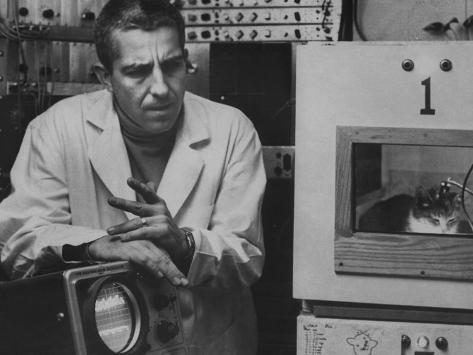
Jaques Derrida

Jaques Derrida illustrates in his Structure, Sign, and Play, various examples of this as well as his interpretation on the use of signs and there meaning. First, before moving further it is important to note that Derrida is very important and significant for his creation of the word “deconstruct” which historically is interpreted as “there is nothing outside of the text”. In other words Derrida believes that deconstruction is an effort to understand a text through its relationship to various contexts. Derrida is famously noted as being a philosopher that applies much of what he writes about to the way he writes, which means that majority of what he talks about is much more than what is perceived on the surface. He advises that we as readers search for meaning not only through declarative and prescriptive passages of text, but also in margins as well as gaps or basically “reading between the lines”.

He starts in his writing by insinuating at an event also referred to in his writing as a “rupture”, which is what he noted brought about change in regards to the concept of structure. He then goes on to say that “rupture” marks the transition from structuralism which noted at the beginning is described as the way we analyze society, to post modernism which is described as this freedom and vivid use of imagination and creativity. In regards to structure he portrays that the entire history of the concept of structure functions as “one system”, “one structure”, which is parallel to that of metaphysics. What these all have in common is the idea that they visualize structure as being something that molds around a center.
Post-Modernism (example)

But since the center (whether it be God, man, happiness, or our conscience) cannot be effected by the structure surrounding it, rather it has been residing outside of the system which means it does not actually mold around the center. To understand this idea better he goes more into depth by talking about the use of signs and says that the face that signs define themselves by their relationships to other signs implies that there cannot be “a center”; neither within or without the structure or system, since the transcendental signifier or in other words the ultimate sign could not be demarcated without allusion to another sign.
Example Of How Signs Differenciate Based Upon Audience

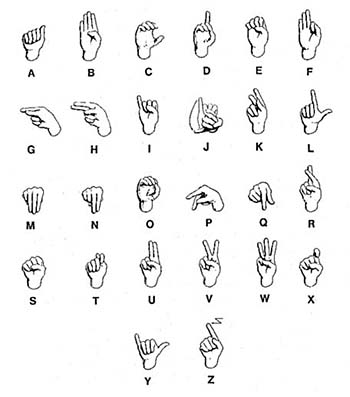
When thinking of examples of how Derrida’s writing and explanation of sign and how sign could not be interpreted without the presence of another sign I thought immediately of gang signs in comparison to sign language. Although this may seem far-fetched, growing up in a high gang populated region of inner city Los Angeles, the use of gang signs and communication amongst gang members is vital for one’s survival. Although the use of hand signals to relay messages goes back as far as slavery in African American culture, today it plays a vital role in protecting gangs turf and keeping a sense of order within the neighborhood. Now at this point I’m sure you are wondering well how does gang signs relate to Derrida but don’t worry I’m getting there now.  


Basic Gang Signs
Gang symbols and signs are very basic hand gestures which although may be simple to impersonate, have a great deal of meaning and symbolism from one gang member to another. Though one gesture may not seem to mean much due to its simplicity, it has much more meaning to those who understand the lingo or slang. These gestures relay messages about rival gangs, police activity, drug dealing, war, or even a basic gesture of acknowledging a friend such as saying “what’s up”. Now comparing it to sign language, it is safe to say that many of the symbols and gestures that gang signs have now began to use have come directly from sign language. Even though sign language is much more complex than gang signs in a since that sign language spells out entire words and sentences, gang symbols act somewhat as abbreviations for sign language with very different meanings.

Sign Language Alphabet
Derrida would approach this idea of use of sign by saying first on behalf of his deconstruction creation that as stated before deconstruction acts as an effort to understand or comprehend the use of sign based upon its relationship to other contexts. He would then go on to talk about how there is not center to this use of sign because the use of signs as communication originated long before gangs were even created. Along with this idea, the idea that the same sign could have two very different meanings in regards to gang signs and sign language act as an illustration that there cannot be a center.   

Friday, March 2, 2012

The Agency of The Letter....


Speed TD Cleat

Since the beginning of high school the swarm of Nike apparel has taken over the industry of athletic attire, most commonly within the realm of football. It seems as though each year there are new shoes coming out, new styles of clothing, and most commonly for football, a new premiere football cleat. When I was a junior in high school, Nike came out with a new cleat called the Speed td’s which offered a light weight cleat that was flashy and comfortable. The next year Nike came out with a new style of cleat called the Vapor Jet td, which other than the newer style offered nothing different than the cleat I wore the year before. Now that I am in college the trend of Nike still continues to have an  effect me as an athlete. The new Pro Combat style has become very popular in the college football era due to its flashy apparel, unique style and color, and comfort; however offer’s nothing significantly different than the cleats I purchased in high school.

So why is that I continued to purchase the newer model of cleat each year when I knew that the cleat didn’t offer anything considerably different than the cleats I already owned? This may seem like a rather pointless question with no real significance, there has to be a reason outside of the flashiness that sparked my interest to get a new pair. Although I couldn’t seem to come up with an even remotely logical explanation, after reading the Jacques Lacan’s Agency of The Letter In The Unconscious, I started to get a better sense of my addiction for new football cleats.

Vapor Jet TD Cleat
In his writing he portrays his disagreements with the famous and well known psychologist Sigmund Freud. Instead of agreeing with Freud’s theory of the unconscious human as being the id, ego, and super-ego, he instead believes that the unconscious is structured like language. You may be asking yourself now how exactly language is structured then, and he answers by use of metonymy and metaphor.
Lacan describes metonymy by saying that we as humans do not know exactly what we want, but rather the objects that we desire dictate what we want. In other words he says that we are never satisfied…because metonymy is never complete. In regards to metaphor, Lacan depicts it as being how all of this metonymy’s become subjects to our desires. Although this may seem very confusing and hard to understand, the theme of Lacan’s writing is that we as humans do not desire objects, but rather we desire the right to

desire.

Nike Pro Combat Cleat

When looking at my unhealthy addiction to purchasing the newest model of Nike football cleats, Lacan would say that I don’t actually need the new cleat in reality, however I enjoy the fact that I desire to purchase them. Although I have good quality cleats each year, the reason that I continue to purchase the newest pair of cleat is not due to lack of quality, but rather because I am never satisfied with the old pair; and seem to always be looking for the next new pair to come out. In other words this goes hand-in-hand with Lacan’s idea that we are never satisfied…because metonymy is never complete.

Friday, February 24, 2012

Do Dreams Have Meaning?

Over the past two years since I’ve been in college, my sleep cycle has been seriously awkward. I usually get to sleep at sometimes 3 am and have to wake up for an 8 am class in the morning. Most of the time when I fall asleep I feel as though I was sleep for about 10 or 15 minutes at most, until the loud and obnoxious sound of my alarm interrupts me; telling me that in reality my few hours of peace and relaxation are over. For the most part I sleep and don’t really dream, however since reading Sigmund Freud’s  book “Interpretation of Dreams”, I have noticed that when I do dream they either tend to be incredibly awesome leaving me upset that it has to end, or on the contrary a complete nightmare that leaves me sweating and terrified when waking up.

The famous and very popular scholar, pioneer, and researcher of sleep William Dement once said “Dreaming permits each and everyone of us to be quietly and safely insane each and every night of the week”. Now before I jump into trying to analyze and dissect both Sigmund Freud and William Dement, id like to question why we even have dreams. It is so weirs to me that we dream each and every night, however I only recall dreaming maybe once or twice a week. Now going back to Dements quote, I agree 100% with what he said in regards to dreams. I know from my personal track record of my dreams that sometimes I dream that I am the most awesome man in the world, and sometimes on the contrary I dream that I am being chased, or captured on the verge of death. Dreams in my opinion really do allow us as humans to be crazy, awesome, figments of our imagination, and human all at the same time. But the real question is what do dreams mean? Do they even have real meaning?

William Dement

Sigmund Freud, the father of “psychoanalysis” as well as the writer of the book Interpretation of dreams, researches and helps to give answers to the many questions that many of us have in mind in regards to our love-hate relationship with dreams. Although his theory of interpreting dreams has been brutally criticized by many, it is without a doubt agreed upon that his ideas have exerted much influence on today’s culture in regards to dreams. He starts by making the distinction between “latent” and “manifest” dreams by illustrating that manifest dreams are surface level dreams (what we dreamt), while latent dreams are our dream thoughts expressed in special language (what the meaning is). 

 in the following pages I shall provide that there is a psychological technique which allows us to interpret dreams, and that when this procedure is applied, every dream turns out to be a meaningful, psychical formation which can be given an identifiable place in what goes on within walking life”. (Sigmund Freud: Interpretation of Dreams)
Sigmund Freud

Freud believes that although scientific opinion has come to dismiss the idea that dreams can be interpreted, “popular opinion” has held on to the conception that dreams do in fact have meaning. He uses the scientific method to prove this. He shows that dreams have “ulterior motives” in which means that the meanings of dreams go beyond what it appears to be on the surface. He concludes that the idea of “wish-fulfillment” is the meaning of each and every dream, and hence there can be no dreams without wishful dreams”. I no by this point your wondering what the heck wish-fulfillment is but don’t worry I will explain. Wish-fulfillment is an attempts by the unconscious to resolve a conflict of some sort, whether it be something as recent as that day, or something that is remembered from the past. However, due to the information in the unconscious being boisterous and unsettling, a “censor” in the pre-conscious does not allow it to pass through to the conscious. It’s important to note that the unconscious mind must wrap the meaning of the information to make it through censorship. In shorter terms, Freud’s theory in Interpretation of Dreams is that “images in dreams are not what they appear to be on the surface, they need deeper analysis and interpretation of they are to inform on the structures of the unconscious”.

So in connecting Sigmund Freud’s theory on dreams into the many questions that you and I have in regards to understanding meaning of our interesting awesome or interestingly weird dreams, the answer is quite simple. Our dreams that we have every night are much deeper than just being chased and killed, or marrying your most sought after crush; instead it goes beyond that. Although it can not be proven exactly what each and everyone of one our dreams literally means, it is without question that dreams do have meaning beyond the surface, as Freud portrayed in his book.

Wednesday, February 15, 2012

Win The Day

The game of football has changed incredibly over the past few decades in many ways. Yes, obviously guys have gotten bigger, faster, stronger, and smarter, however what about image? I have noticed that over time as my football carreer developed, the many pressures of image have also increased. Advertising companies such as Nike have taken over the television screen, the malls front windows, billboards, and even have created collegiate football teams into advertisments themselves. Nike takes pride in there many mottos which include "just do it", "dont back down", "unstoppable", but does it ever talk about how the gear or equipment actually effects better play? The answer is no. There ads focus more on how flashy and state of the art there designs are, the color and texture of the new material, or the creativity of the new logos, but it never really talks about better preparing the players in the field of play.

Here at School we have been discussing how much we dislike the look, feel, and style of our uniforms and equipment. Although not all guys dislike it, the majority of the team would prefer to have Nike instead of the current sponsorship we have today, or rather any other brand? Why is it that the guys only want Nike? Is it because of the constant advertisment that we are bombarded with in commercials, at local sporting good stores, or even the fact that majority of the teams we face all have brand new Nike uniforms? I strongly believe that its a little bit of both. Some have suggested other sponsorship ideas such as Addidas, Under Armor, which are cheaper and just as good of quality to help with performance on the field. However, guys on the team are very set on there ideas that Nike is the only and best way to go.

Addidas Football

  
So im sure at this point the question is why does it matter that our guys want only want Nike and are not open to other and even possibly better oppurtunities. First off, the fact that Nike has not only taken control of almost every form of advertisment possible, has created a way to target a very large audience, as well as persuaded athletes based upon its new equipment and uniforms, that Nike is the superior brand for football. Like many of my teamates who would spend extra money on a swoosh and not on actual better equipment, the world today does the same thing by focusing so much on the logo or brand itself that it almost forgets about the fact that the equipment or logo on it does not perform for the individual.
  
Under Armour Football

Karl Marx in his book "The Fetishism of Commodities" as well as Naomi Klein focus on many issues similar to this one in very interesting ways. Starting with Karl Marx, he believes that "exchange value" is in a sence derived from the laour of man or human kind. Although this could be very true and very agreeable, I strongly believe that in regards to Nike the logo and perception of the compnay really dictates the value and the price that people will pay for it.


Nike Pro Combat

Naomi Klein on the other hand has a different illustration of her views on logo and advertisments in todays culture. Rather than focusing on marketing a specific item or product, she instead portrays how companies use images or words to portray there object as being superior or the best. In regards to Nike the examples of this could go on for days. From "just do it" to "change the playing field forever" to "win the day" to even "win forever", all of these images and texts are persuasive and have very much control of the audience that views them. When thinking of football in todays culture, the first thing people think about is Nike. However when thinking about Nike, the first thing people think about are things such as Oregon, Tiger Woods, or Michael Jordan. Im sure at this point you may be asking yourself why this may be, and in my opinion I strongly believe that its because Nike truly represents the sport of football in todays society. 

Oregon University Football Nike Ad
The fact that Addidas  and Under Armor both have high quality equipment and performance gear, but get less public praise is somewhat humorous. When thinking about Americans and society today its safe to say that most of us are looking for a "bargain" or a huge deal", however Nike in many ways attracts millions of people to purchase there over priced materials simply because of a swoosh the size of toothepick. So how are we suppose to change our perception of the persuasive and over powering love for Nike products? In my opinion we as athletes and people who purchase Nike materials should really look into other products that are offered by other companies because there are so many other logos and brands out there than function and perform just as good if not better than Nike products.  


Monday, February 6, 2012

Discipline And Punishment

The day after my literary theory class discussed Michel Foucault’s book “Discipline and Punishment” I came across a YouTube video talking about the high number of black men that are incarcerated today. The video discussed many things about today’s prison system that I feel match very well with Foucault’s theory.

The video started out by stating that there are more black men in the incarceration system today, then there were in slavery during the 1850’s. A Columbia Professor by the name of Mark Lamont-Hill pointed out many other troubling stats which include the fact that over 840,000 or 40.2% of prison total population are made up by black men. Along with the high number of black population within the penal system today, 88,000 dollars is spent each year per inmate, while only 9,000 dollars are spent on education. These statistics blew my mind. Lamont said that “we live in a nation of first classjails, and second class education”. My major question after watching this video was simply why? However, after reading some of Michel Foucault’s book on “Discipline and Punishment”, I began to put the pieces together.


Foucault begins his book by talking about the ways in which punishment was handled in the early 18th and 19th centuries. Punishment included horrid torture and physical hidings amongst crowds of people who gathered around to see justice being wrongly served. Although the crowd of people did not like or agree with the brutality placed upon people within the society, the authority at the time was the king. Foucault discussed in his book the culture in which the right to punish was not decided by law or a system, but rather the power of the kings discretion. It was even more startling to find out that the crimes that these people were being executed for were not ones that deceived of “public Good”, but rather a personal slur to the king himself. The public executions of these people were not to uphold justice in the eyes of society; it was rather shown publically to illustrate the power of the king and his superiority.

When reading Foucault’s book it made me come to the realization that the king of the 18th century is a symbol of the upper or ruling class of the 21st century. Prisons are around still because they have many benefits to the ruling elite upper social class. It has been though that the lower social class commits crime to rebel against the upper class, however the upper class uses the law of today to keep the lower class suppressed. Foucault says “It would be hypocritical or naïve to believethat the law was made all in the name of all; that it would be more prudent torecognize that it was brought to bear upon others; that in principle it appliesto all citizens, but that it is addressed principally to the most numerous andleast established class (276)”. With this in mind Foucault believed that the elite social class used the lower class in such a way to benefit themselves.

Although Foucault’s book goes much more into depth in regards to portrayals of punishment such as torture, and discipline, I felt that the idea about the elite social class having the authority over the lower class is the primary cause for the rising number of black men in the prison system today. Although I am not justifying crime as being morally acceptable or justified under any circumstance, my problem is that as stated in the video illustrates, the elite class is placing more emphasis on the penal system, than on keeping black men out of jail.

Foucault believed that the prison system is not a failing system designed to punish criminals, but rather is a system which functions commendably at attaining its deeper purpose. The prison system allows for the upper or elite social class to remain in power and to continually suppress the lower social class (which in today’s society is the black and Hispanic community).The prison system “effectively incarcerates,  isolates and economically controls the mostdynamic members of the lower class”. The suppression of the black community not only has an effect on the 840,000 inmates that reside in penitentiaries across the united States, but it also has an even greater impact on the women and children of the black community; growing up without fathers and husbands in their lives. Mark Lamont-Hill said that 1 in every 15 black children has a parent that has been or currently is affiliated with the prison system. On the opposing side he mentioned that in white children 1 in 111 children have parents that were (or are) affiliated with some form of the prison system. In looking at the difference in number between white and black children, it almost seems as though society is encouraging more and more black people to flood the gates of the penal system.

It is startling, yet amazing to see how Michel Foucault’s theories and ideals are so prevalent and alive in today’s culture. Although Foucault was not specifically talking about the black community of today, the points for which he presented in his book go hand-in-hand with how society has transformed today. Foucault believed that “the discipline of the prison systemhas spilled out all over society. The spillover causes a struggle for eachmember of society. People either struggle and resist the discipline of societyand may be labeled criminal, or submit to it and lose their own identity. In Foucault’s theories and beliefs, the loss of one’s own personal identity to the discipline of the state is the "real crime”.


Wednesday, January 25, 2012

State Of The Union Analysis


On January 24th 2012, President Barack Obama presented the world with his 2012 State of The Union address. In his speech he focused on many issues such as our economy, the employment rate, the education system, as well as on stimulating jobs for the many Americans who have had to suffer from our recent recession. Along with speaking about these issues, he challenged and encouraged government officials to take charge and help rebuild the mounting economy, which would allow for Obama to successfully target the promises that he made in 2008 when he first took office as the President.

In his speech he focused majority of the beginning portion around the United States economic history, while showing the progress that it has made here today in 2012. While some tend to bash him down and view him as being ineffective as leader and President of our nation, President Obama quickly reminded the audience of the conditions for which he had to deal with when he initially took office. Six months prior to him taking office nearly 4 million jobs had been lost, as well 4 million more jobs being lost a few months into his presidential reign. On a more positive note, after the frightful first few months of his presidential campaign the employment rate increased due to advances in manufacturing. With these advances, millions of jobs were created for United States citizens which ultimately facilitated in our economy improving in the right direction.

In his speech he said “The state of the union is getting stronger. And we’ve come too far to go back now”. A primary focus that Obama discussed during his speech was the idea of this superlative country and economy. The economy and country that we live in by his expectations is one which “everyone is given a fair shot, everyone does their fair share, and everyone plays by the same set of rules”. From a democratic standpoint the focus on equality and fair opportunity is no surprise, but the example of “the Buffett rule “that he portrayed was even more of a reason to fight for change and equality. This “Buffett rule” showed that people making millions of dollars in today’s economy are in fact held to lower tax expenditures then the average working secretary who is perhaps considered to be lower middle class. Not only is this statistic troubling and unfair, rewarding millionaires for being rich and punishing low and middle class citizens for not being as financially affluent seems to be morally erroneous. The significance of President Obama comparing millionaires such as Warren Buffett to average working citizens such as secretaries was not to make anyone seem inferior or superior, but rather to show the shift in American culture where “equal opportunity is more powerful than is equality of wealth and income”.

Besides the facts and evidence of progression as a nation, the way in which President Obama presented his speech to his audience was one in which I found abundant. While many people who watched the speech were waiting for him to praise the democratic view, and bash down the republican way, he instead did neither. Instead he encouraged the audience and the millions watching at home to focus less on political party, democrat or republican, but rather on finding a common ground that everyone could agree on. In regards to political party he believed that we need to “end the notion that the two parties must be locked in a perpetual campaign of mutual destruction”.  What is meant by this is simply that we as a nation are at its strongest when we are united as one. And when we are united and together as one strong and collective body of citizens, there is nothing that we cannot accomplish or achieve.

When comparing President Obamas State of The Union speech to a theoretical model for which we have discussed in class so far, I strongly believe that Roland Barthes’s ideals apply greatly with those of Obamas speech. The French theorist Barthes in his essay entitled “Death of the author” strongly disagrees with the tradition ideals of writing; where the central focus is on the author, but rather suggests that the text itself should be the stronger focus. Barthes believes that “the author is never more than the instance of writing, just as “I” is nothing other than the instance of saying “I”: language knows a “subject”, not a “person” (145). When comparing the President’s State of The Union speech to Barthes approach, he focused on the people rather than on himself; which symbolically illustrates the United States citizens as being the text or work or writing, and himself as being the author or creator of the work. Barthes disagreed with the traditional approach of focusing on the author because he felt that by centering ones focus on the author “imposes a limit on that text. (147).